
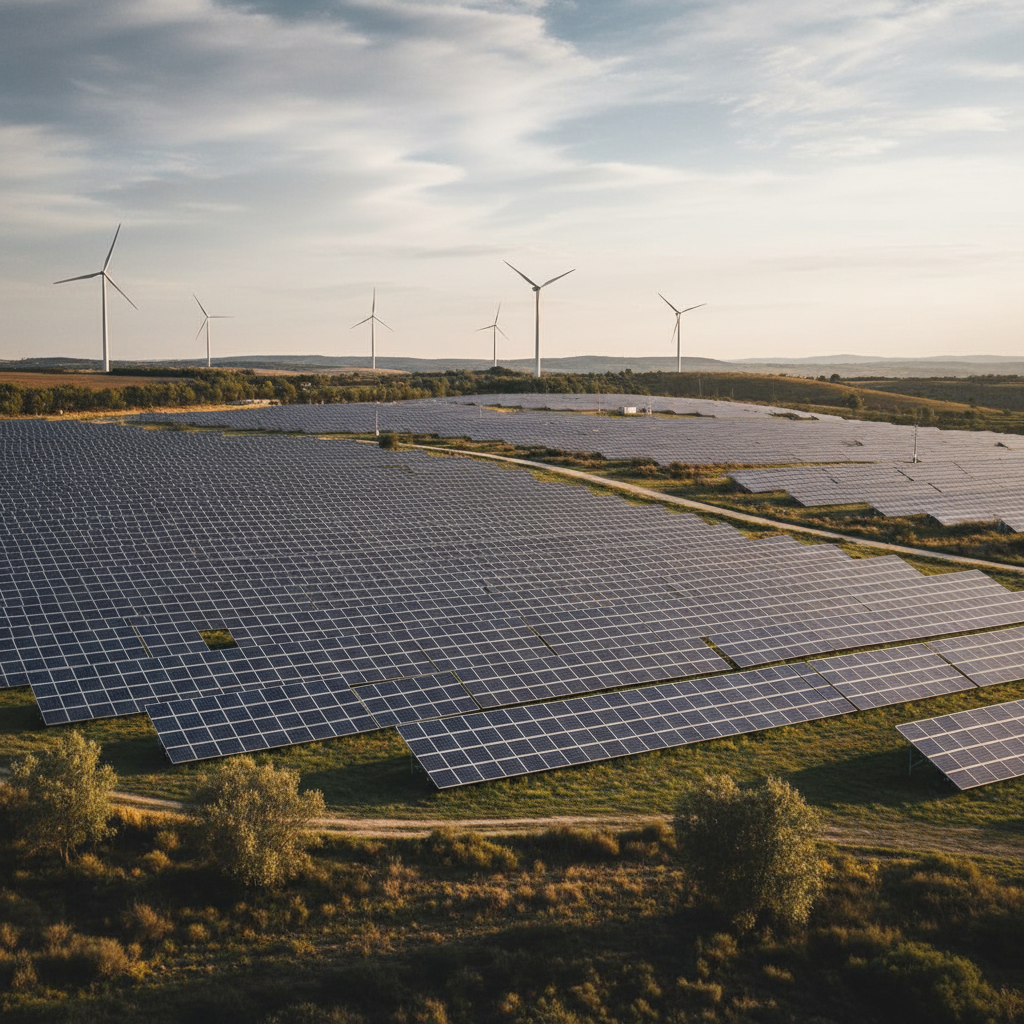
Solar power marked a historic milestone in 2025 by becoming the world’s largest renewable energy source, overtaking wind power and significantly contributing to a global shift towards clean energy.
Solar Power’s Record-Breaking Growth
According to a 2025 review of global electricity generation by Ember, renewable energy generation exceeded coal for the first time, with solar, wind, hydropower, and biofuels delivering nearly 34% of the world’s power compared to coal’s 33%. Solar power played a crucial role in achieving this milestone by becoming the top renewable energy contributor, surpassing wind.
Countries Increasingly Embrace Solar Energy
While China remains the global leader in solar capacity, several smaller countries generate a significant portion of their electricity from solar power. For example, Chile sourced 25% and Hungary 27% of their electricity from solar in 2025, a dramatic increase from less than 10% in 2020. Over 50 countries now rely on solar for at least 10% of their power, up from just 15 countries in 2020.
Rising Midday Solar Peaks and Storage Challenges
Solar generation peaks at midday, with some countries setting new records. In May 2025, the Netherlands generated an average of 77% of its midday electricity from solar, while Hungary hit an extraordinary 91%, surpassing its previous peak of 67%. The next step involves advancing energy storage, such as battery systems, to manage solar power supply when sunlight is unavailable.
Untapped Potential in Fossil Fuel-Dependent Regions
Despite rapid clean energy adoption in some areas, many fossil fuel-dependent countries have vast untapped solar potential. The U.S. met 88% of its 2025 electricity demand growth with clean power, while India met over half of its growing demand with fossil fuels despite abundant sunlight. Countries like Saudi Arabia, Indonesia, and Egypt also continue expanding fossil fuel usage, missing opportunities to harness ample solar resources.
Why This Matters
The rise of solar power signals a transformative global shift toward sustainable energy, helping reduce greenhouse gas emissions and dependence on fossil fuels. Countries embracing solar technology benefit from cleaner air, energy independence, and economic growth through new green jobs. Accelerating energy storage solutions and encouraging solar adoption in fossil fuel-reliant nations are critical for sustaining this positive momentum.
Conclusion
Solar power’s remarkable growth in 2025 highlights its critical role in the global clean energy transition. With many countries setting new solar records and a growing share of energy coming from the sun, the future of renewable energy looks bright. Continued innovation, supportive policies, and investments in storage are essential to fully unlock solar power’s potential worldwide.