
The Philippines is moving faster on renewable energy development, with 22 projects totaling 1,471 megawatts (MW) targeted to come online by April 2026. The push reflects a broader effort to strengthen electricity supply, reduce exposure to fuel market volatility, and support the country’s long-term energy transition.
For infrastructure leaders, local governments, and smart city stakeholders, this is more than a power-sector update. It is a major signal that the country is prioritizing cleaner, more resilient, and more dependable energy systems to meet rising demand.
A Major Renewable Energy Push
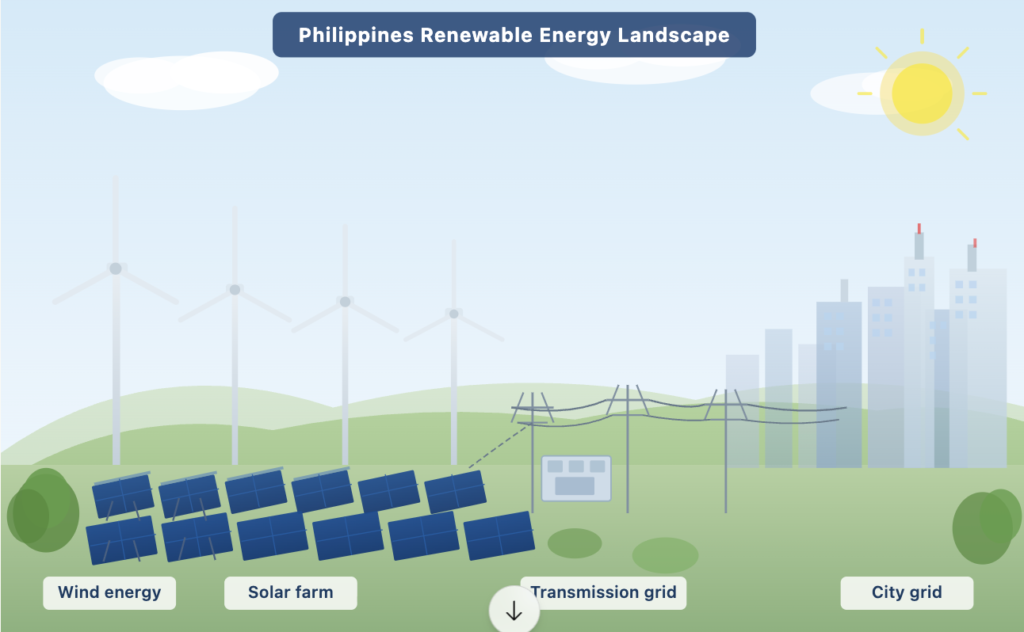
According to the Department of Energy, the incoming capacity will largely come from renewable sources. Of the 22 projects in the pipeline, 12 are solar developments with a combined 1,284 MW. The rest include six hydroelectric plants with 48.23 MW, two biomass projects with 38 MW, one wind project with 13.56 MW, and a 20 MW Integrated Renewable Energy Storage System.
This mix highlights the country’s growing focus on diversifying generation sources whilst improving grid readiness for future demand.
Why the Fast-Track Matters
Power demand continues to rise across residential, commercial, and industrial sectors. At the same time, energy planners must manage fuel cost pressures and uncertainty in global oil markets. Accelerating renewable energy projects helps address both concerns by adding new capacity and reducing dependence on imported fossil fuels.
In practical terms, faster project delivery can help lessen supply risks, support grid reliability, and provide more breathing room during periods of peak demand.
Part of a Larger National Strategy
These 22 projects are part of a bigger directive to fast-track 200 power plants over the next three years. The goal is clear: expand electricity supply, keep critical projects moving, and improve the country’s ability to respond to growing demand.
The Department of Energy has also reported that 24 monitored power plants are already operational, contributing 1,178.642 MW, alongside seven battery storage facilities with a combined 190 MW. This shows that the government’s monitoring and acceleration efforts are already translating into new capacity on the ground.
Coordination Across the Power Value Chain
One of the biggest causes of delay in large energy projects is not only construction but also transmission access, interconnection requirements, and regulatory processing. To reduce these risks, the Department of Energy is coordinating with the National Grid Corporation of the Philippines, the Energy Regulatory Commission, and the Independent Electricity Market Operator of the Philippines.
This kind of whole-of-system coordination matters. It helps ensure that new generation projects are not only built, but also properly connected and integrated into the power market.
What This Means for Smart Cities and Critical Infrastructure
Stable and scalable power is foundational to modern urban systems. Renewable energy expansion supports not only households and businesses but also the technology layers that smart cities increasingly rely on, including surveillance systems, traffic management, digital public services, data platforms, and connected devices.
For cities and municipalities pursuing digital transformation, stronger power infrastructure reduces risk and improves long-term sustainability. For private sector operators, it creates better conditions for expansion, automation, and business continuity.
A Stronger Path Toward Energy Resilience
The fast-tracking of 1,471 MW of renewable power is an important step toward a more resilient Philippine energy landscape. It reflects a practical balance between immediate supply needs and long-term sustainability goals.
As more renewable projects move forward, success will depend not only on approvals and construction, but also on effective grid integration, storage support, and coordinated planning across the energy ecosystem.
For the Philippines, this acceleration is a meaningful step toward cleaner growth, better energy security, and a more future-ready power system.