
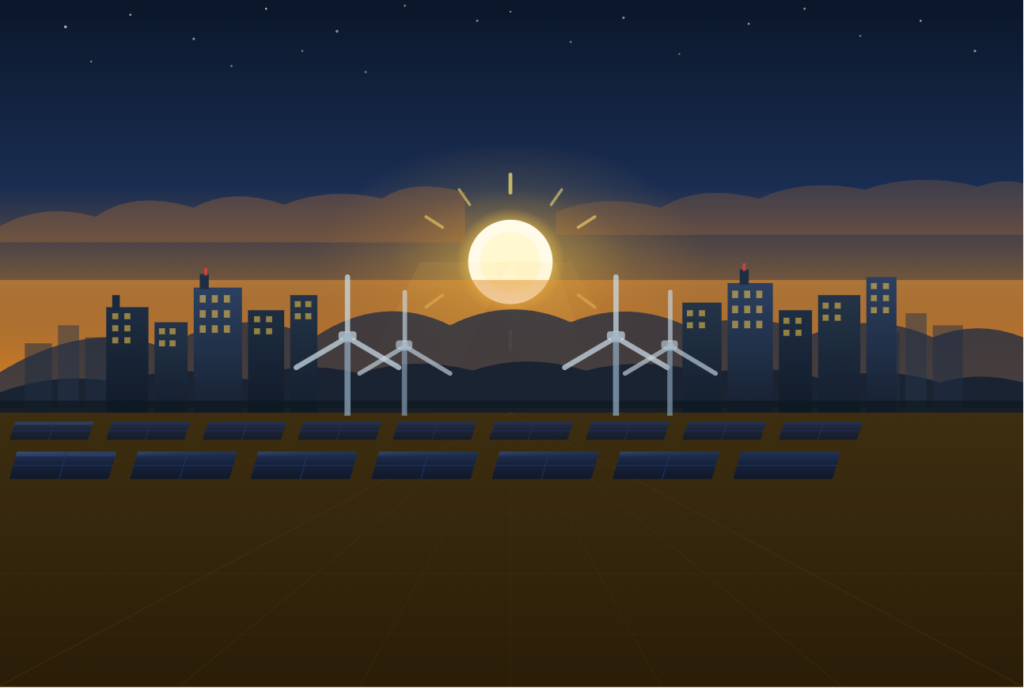
The global energy landscape is undergoing a rapid transformation, with renewable energy capacity expanding at an unprecedented pace. In 2025, renewables accounted for nearly half of all newly added electricity capacity worldwide, driven primarily by a massive surge in solar installations.
This milestone signals a turning point in how countries generate power, highlighting a strong global shift toward cleaner, more sustainable energy systems.
A Record-Breaking Year for Renewables
Renewable energy sources experienced significant growth in 2025, contributing close to 50% of total global electricity capacity additions. This expansion reflects increasing investments, supportive policies, and the urgent need to address climate challenges.
Among all renewable sources, solar power led the charge. Rapid deployment, falling technology costs, and scalability have made solar the dominant driver of new capacity worldwide.
Solar Power Takes the Lead
Solar energy has become the backbone of the global renewable expansion. Countries across Asia, Europe, and the Americas are accelerating solar farm development, rooftop installations, and hybrid energy systems.
The continued decline in solar panel costs, combined with faster installation timelines, has made it one of the most accessible and attractive energy solutions for both developed and emerging economies.
Why This Growth Matters
The near 50% contribution of renewables to new capacity is more than just a statistic. It represents a structural shift in the global energy mix.
- Reduced reliance on fossil fuels
- Lower greenhouse gas emissions
- Improved energy security
- More stable long-term energy costs
As countries continue to expand renewable infrastructure, they are also building resilience against fuel price volatility and supply disruptions.
Challenges Still Ahead
Despite the rapid growth, the transition to renewable energy is not without challenges. Grid integration, energy storage, and infrastructure upgrades remain critical issues that need to be addressed.
Intermittent energy sources like solar and wind require advanced grid management systems and battery storage solutions to ensure consistent and reliable power delivery.
Implications for Smart Cities and Infrastructure
The rise of renewable energy has direct implications for modern cities and digital infrastructure. Reliable and sustainable power is essential for supporting smart technologies, including IoT systems, AI-driven services, and real-time data platforms.
For smart city initiatives, renewable energy provides a foundation for scalable and future-ready urban environments.
A Global Shift Toward Sustainability
The rapid expansion of renewable energy in 2025 demonstrates a clear global commitment to sustainability. Governments, private investors, and technology providers are aligning efforts to accelerate the transition toward cleaner power sources.
This shift is not only environmental but also economic, opening new opportunities in energy innovation, infrastructure development, and digital transformation.
Final Thoughts
The nearly 50% growth in renewable energy capacity marks a defining moment in the global energy transition. With solar leading the way, the world is moving closer to a future powered by clean, reliable, and sustainable energy.
For countries like the Philippines and emerging smart cities, this trend offers a blueprint for building resilient energy systems that support long-term growth and innovation.