
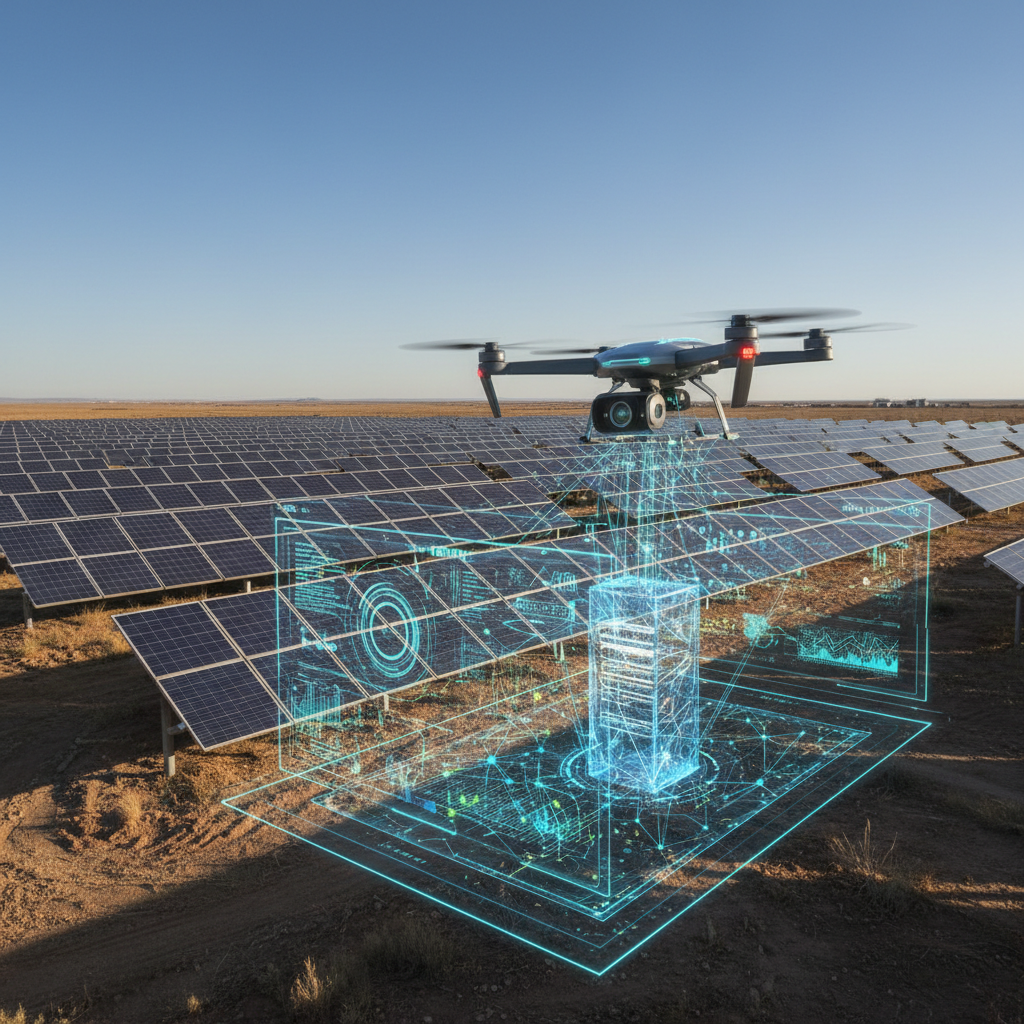
Solar energy is emerging as a cornerstone of global efforts to combat climate change and transition to sustainable energy sources. Recent research leverages cutting-edge machine learning and deep learning models to forecast solar photovoltaic (PV) energy potential worldwide from 2023 to 2050.
The Rise of Solar Energy
With climate change reaching critical levels, investing in solar technology offers a promising path towards reducing carbon emissions. Solar PV capacity has surged from 1.23 GW in 2000 to over 1053 GW by 2022. Correspondingly, solar PV energy production grew dramatically, underscoring solar power’s increasing role in clean energy supply.
Advanced Forecasting Models: SARIMAX and TCN
This study applied two sophisticated time-series models:
- SARIMAX (Seasonal Autoregressive Integrated Moving Average with Exogenous Factors): Efficiently integrates external variables such as temperature and humidity to improve prediction accuracy.
- Temporal Convolutional Network (TCN): A deep learning approach capable of capturing long-term dependencies in highly intermittent solar irradiance data.
The models forecast tremendous solar PV capacity increases, with SARIMAX projecting growth from 1291.29 GW in 2023 to over 11,641 GW by 2050, while TCN estimates around 11,577 GW by 2050. Solar energy output is similarly expected to rise from about 1935 TWh in 2023 to nearly 15,000-16,000 TWh by 2050.
Regional Solar Power Highlights
Asia leads with 47% of global solar potential, followed by North America at 20%, and Europe at 13%. Countries like Namibia, Australia, Chile, and Pakistan exhibit some of the highest daily solar irradiance outputs, making them key players in the solar energy landscape. Cost variations also exist, with India and China enjoying comparatively low solar generation costs, while the U.S. and U.K. face higher expenses.
Why This Matters
The accurate forecasting of solar energy potential is critical for policymaking, investment decisions, and achieving climate goals set by global agreements such as the Paris Agreement. By leveraging these predictive models, governments and stakeholders can better plan renewable energy infrastructure, accelerate decarbonization efforts, and secure energy sustainability amidst rising demand and climate challenges.
Conclusion
Machine learning and deep learning methods like SARIMAX and TCN provide powerful tools to estimate future solar PV potential with high precision. Their insights support advancing solar technology on a global scale, helping to pave the way for a clean, renewable energy future critical to mitigating climate change impacts.