
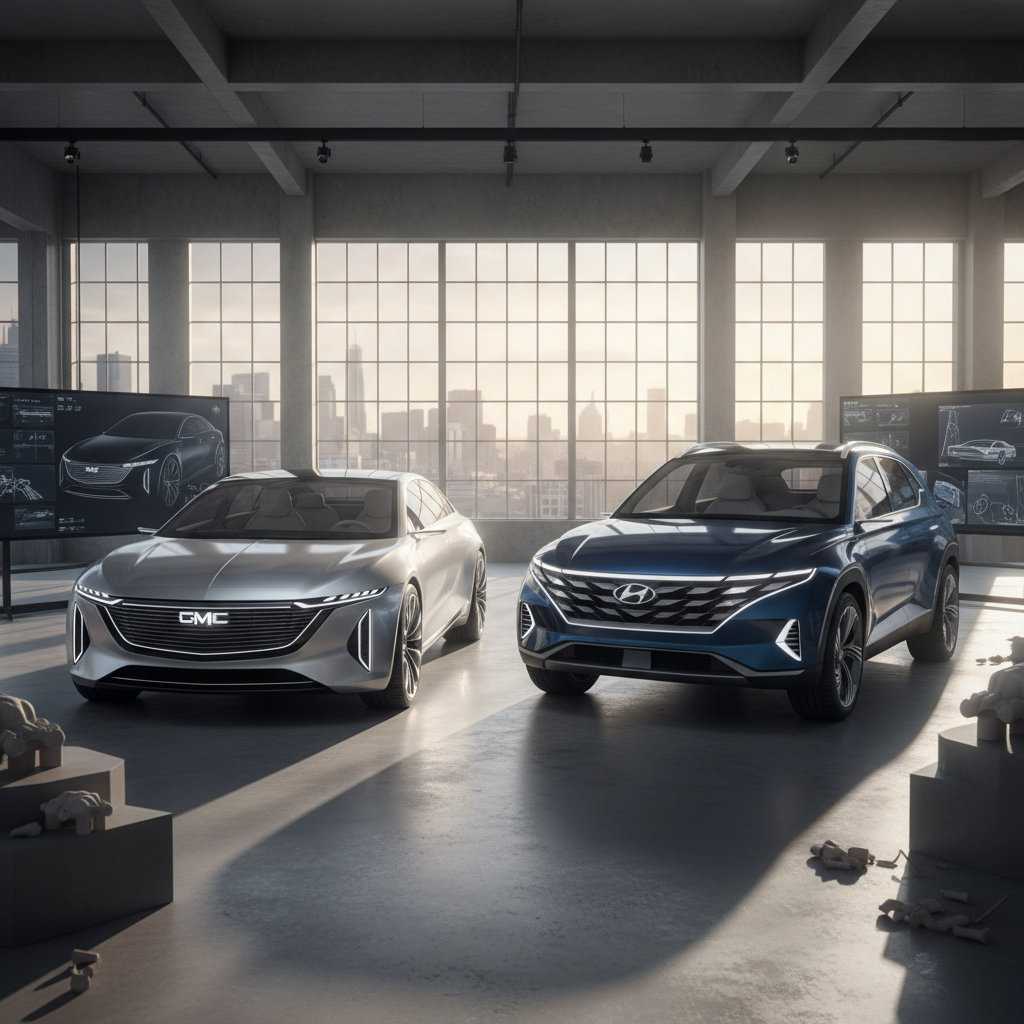
In a major industry announcement, GM and Hyundai have partnered to develop five new vehicle models with a combined production goal of 800,000 units annually. Despite the scale of this initiative, the decision to produce mostly fossil fuel and hybrid-powered vehicles has drawn widespread criticism from clean energy advocates and market analysts.
Details of the Partnership
The collaboration aims to introduce five vehicle models, with four targeted at South and Central American markets. These four vehicles include a compact SUV, a compact car, a compact pickup truck, and a midsize pickup truck. All four will use either conventional combustion engines or hybrid propulsion systems rather than full electric powertrains.
The Electric Vehicle Market Context
At a time when electric vehicle (EV) adoption is rapidly expanding, especially with Chinese automakers like BYD bringing affordable, high-tech EVs to similar markets, GM and Hyundai’s strategy appears dated. With clean transportation technologies advancing, the growing consumer demand for electric vehicles in Latin America represents a significant market opportunity that this partnership is currently missing.
Positive Note: Electric Commercial Van for North America
The fifth vehicle model in this partnership will be an electric commercial van designed for the North American market, to be manufactured in the United States. However, production is not expected to begin until at least 2028, raising questions about its competitiveness against existing or upcoming electric commercial vehicles from companies like Ford and Rivian.
Why This Matters
The automotive industry is at a critical juncture where embracing electrification is essential to meet climate goals and align with consumer preferences. By focusing predominantly on combustion and hybrid vehicles, GM and Hyundai risk falling behind in key growth markets and contributing to ongoing pollution challenges. Their delayed approach to electrification contrasts sharply with the aggressive EV strategies of other manufacturers, especially in emerging markets that are ripe for clean vehicle adoption.
Conclusion
While GM and Hyundai’s collaboration holds promise in terms of production volume, the limited commitment to electric vehicles is a setback in the global push towards sustainable transportation. The delayed timeline for their electric van and the fossil fuel focus in Latin America highlight the need for faster innovation and greener strategies in the automotive sector.