
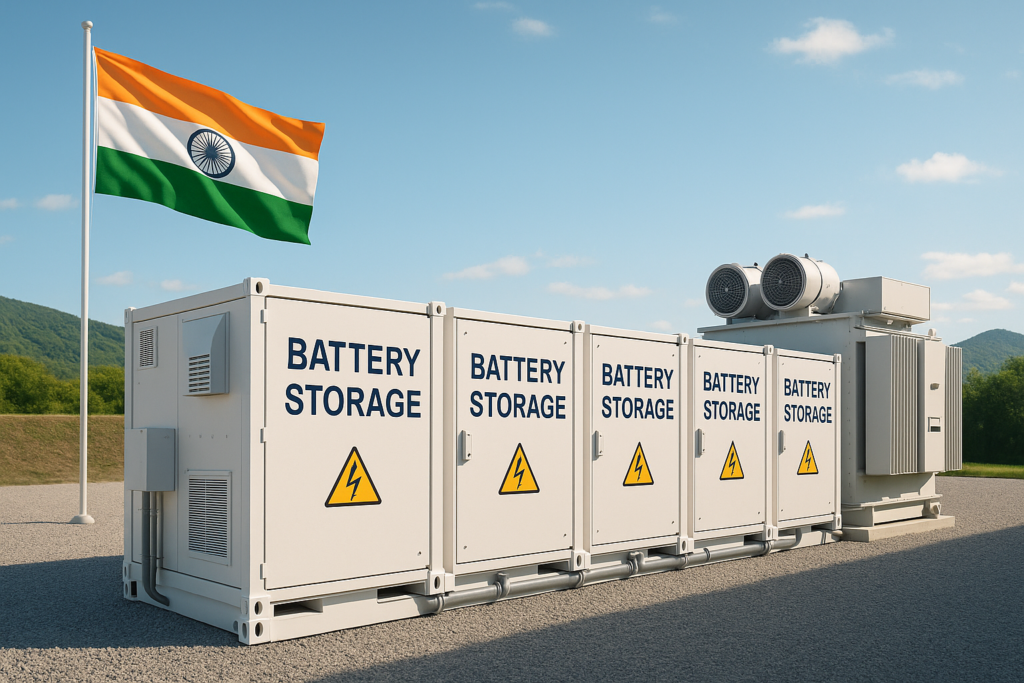
Battery systems are emerging as the missing piece that could let India turn abundant sunshine into reliable, round-the-clock electricity — and help the country meet its updated climate targets.
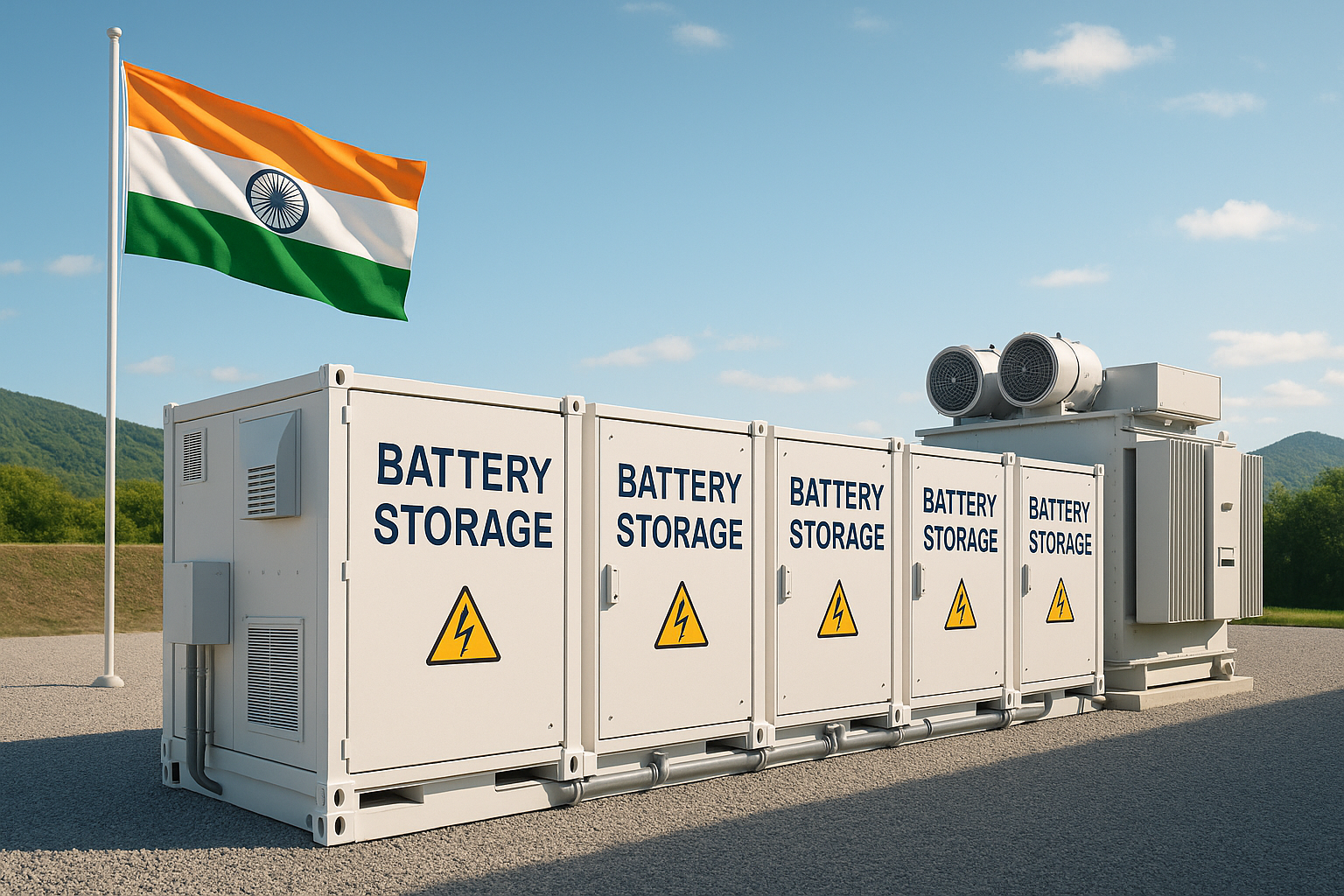
India’s updated climate goals and the challenge ahead
India recently raised its climate ambitions: a 47% reduction in emissions intensity of GDP versus 2005 by 2035, a target for 60% of power capacity from non-fossil sources by 2035, and a net-zero goal for 2070. Achieving these milestones will require rapid scaling of renewables together with large-scale energy storage to smooth variability and supply demand after sunset.
Why solar plus batteries could cover most demand
Independent analysis shows the combined cost of solar and grid-scale battery energy storage systems (BESS) has fallen dramatically. Ember’s modeling suggests that, with current cost trajectories, solar paired with batteries could meet up to 90% of India’s electricity needs at a levelized cost near INR 5.06/kWh (about $56/MWh), below average power purchase costs in many states. That shifts the question from whether solar can provide large shares of power to how quickly deployment can scale.
Solar growth in India — rapid but not finished
Solar output is already rising fast. In 2025 solar generated roughly 9.4% of India’s electricity, nearly double its share from 2022. Installed solar capacity climbed to about 143 GW in FY2025-26 from under 5 GW a decade earlier, supporting the government’s target of 500 GW of non-fossil capacity by 2030. Batteries would enable much more of that solar generation to serve evening and overnight demand.
Finance and policy: a decisive factor
Reports from market analysts stress that reaching targets like 500 GW of renewables depends not only on technology but on the structure of debt and access to capital. Credit markets are already differentiating between clean and thermal assets: renewable-focused utilities have stronger margins, easier access to international financing, and greater investor interest, while thermal-linked firms face increasingly constrained access to overseas capital. This financial divergence can accelerate the shift toward renewables if policymakers and lenders support large-scale storage investments.
Lessons from global projects and grid operations
Practical examples illustrate the impact of storage. California’s expanding battery fleet recently supplied large shares of evening demand, with batteries delivering about 12.3 GW at a peak hour and covering more than 40% of grid needs at that time. Total deployed battery capacity in the state climbed to over 17 GW from just 1.3 GW in 2020.
Abroad, the UAE is developing projects that blend solar arrays with substantial battery capacity to guarantee at least 1 GW of continuous supply day and night. Chile is also investing heavily: roughly 9 GW of storage is in operation, construction, or testing, with an additional 27 GW in the development pipeline — a build-out motivated in part by high curtailment rates (about 19% of solar and wind in 2024) where storage could capture otherwise wasted generation.
Why this matters
Battery energy storage changes the economics and reliability of renewable power. By storing cheap daytime solar and releasing it after sunset, storage reduces the need for fossil-fired peaker plants, improves grid stability, and makes high shares of variable renewables practical. For India — where reliance on imported fossil fuels also carries geopolitical and fiscal risks — batteries can lower system costs, reduce exposure to global fuel markets, and accelerate decarbonization.
Conclusion
Falling costs for batteries, combined with India’s rapid solar expansion and supportive financing, could make a predominantly solar-and-storage electricity system achievable within years rather than decades. Finance, policy design, and fast deployment will determine how quickly India translates ambitious climate targets into sustained emissions reductions.