
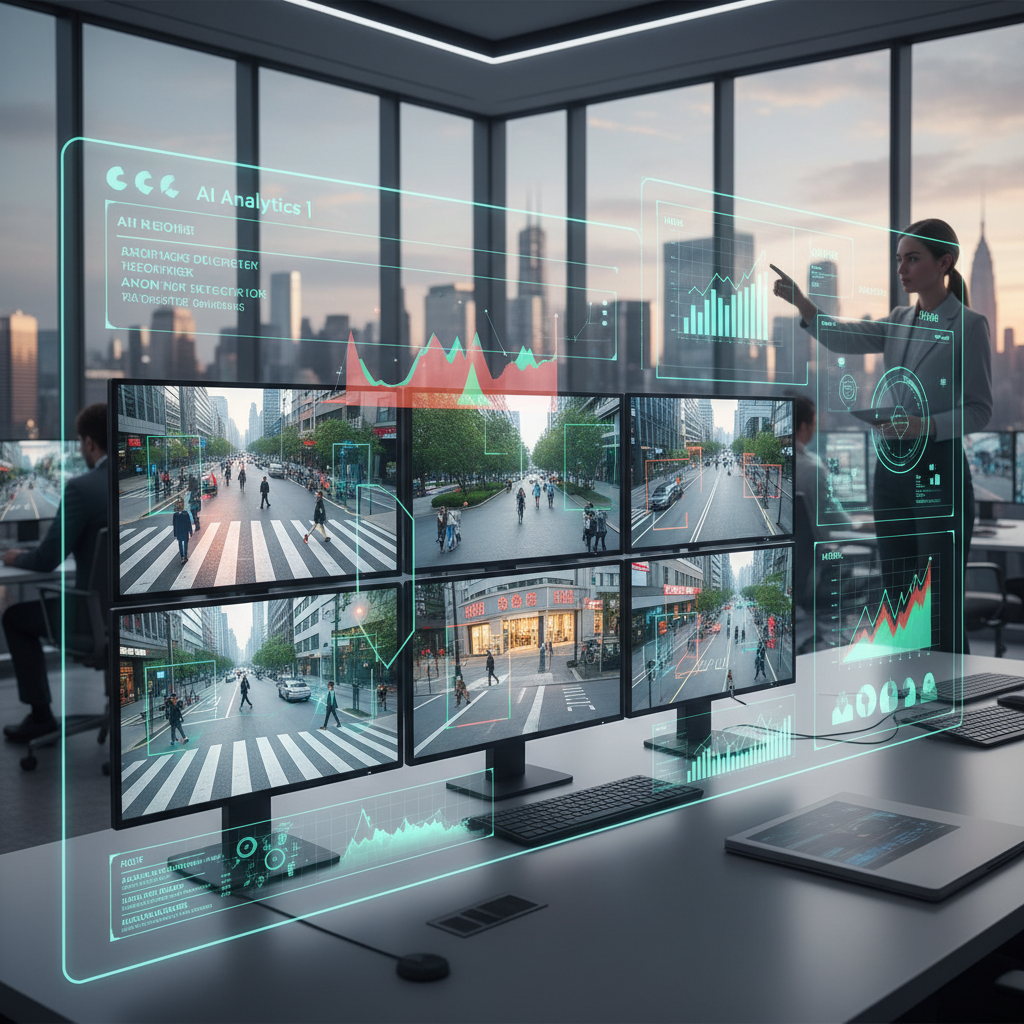
As security demands evolve, 2026 promises significant advancements in video surveillance and analytics technology. From enhanced AI capabilities to cloud-native systems, the landscape of CCTV is becoming smarter, more efficient, and scalable.
Understanding CCTV Technology
Closed-Circuit Television (CCTV) refers to a network of cameras and related technology used to transmit and record video footage within a closed system, primarily for security purposes. This includes cameras, recorders, software, and video management systems designed to monitor and protect properties by providing real-time footage and recording suspicious activity for investigation.
AI-Powered Analytics Transforming Surveillance
One of the most notable trends in 2026 is the integration of AI smart analytics, which convert hours of raw footage into actionable big data. This technology allows for:
- Deep Learning: Advanced AI analyzes video to automatically detect people, vehicles, and unusual activity, improving the accuracy and usefulness of surveillance systems.
- Improved Efficiency: Continuous monitoring with consistent accuracy enables security teams to focus on critical issues rather than constant video review.
- Enhanced Decision-Making: Data-backed insights support better event response and system improvements.
- Integration and Automation: AI can connect with other security devices to automate responses, creating smarter security networks.
This transformational shift means security systems not only record but actively interpret their environments, providing sharper insights.
Advances in Cloud and Edge Computing
Cloud-native solutions and edge computing are becoming essential for modern video surveillance. Cloud technology enables scalable, remote-first management of video systems, making updates and data access simpler and more flexible. Edge computing allows intelligent processing to happen locally on cameras or devices, reducing latency and improving response times.
Shift from Analog to Fully Digital Systems
The demand for IP cameras is rapidly overtaking traditional analog systems. Fully digital cameras offer better image quality, easier integration, and energy-efficient technology compliant with modern standards like ONVIF. Businesses are increasingly adopting scalable ‘As a Service’ models to integrate these advanced systems within current operations seamlessly.
Why This Matters
The developments in video surveillance and analytics technology are crucial as they bolster the ability to protect people and assets more effectively. The integration of AI and cloud computing reduces false alarms and enhances situational awareness, allowing for quicker and more accurate responses to threats. Transitioning to digital systems also future-proofs security infrastructure, making it adaptable and cost-efficient.
Conclusion
The video surveillance industry in 2026 is embracing innovation with AI analytics, cloud connectivity, edge computing, and a definitive move to digital cameras. These trends collectively improve efficiency, accuracy, and scalability in security systems, empowering organizations across various industries to better mitigate risks and safeguard their assets.